Earth's magnetic poles could flip faster than previously thought, scientists reveal
A new international study shows that Earth's magnetic poles can switch places faster than once every 100,000 years, driven by deep mantle processes.
 🧠AI Analysis
Photo: UNIAN
Key points
- Magnetic poles may flip faster than once every 100,000 years
- Study is based on limestone rock analysis in southern China
- Reversal frequency acceleration is linked to Pangea's formation
- Past field weakenings could have affected Earth's atmosphere
Earth's geological history is marked by profound transformations, and recent scientific findings offer new insights into the planet's internal dynamics. An international team of researchers, led by specialists from the Chinese Academy of Sciences, has discovered that Earth's magnetic poles can swap places at a remarkably rapid pace—less than once every 100,000 years. These findings shed light on the complex mechanisms governing our planet's protective magnetic shield.
Limestone analysis and tectonic influences
To reconstruct past geomagnetic behavior, scientists examined limestone formations near the city of Liuzhou in southern China. This research mapped 29 intervals of magnetic polarity reversals over a 3.75-million-year period. The data revealed that following the stability of the Kiama Superchron, the frequency of pole reversals surged significantly, reaching approximately 11 instances per million years.
Researchers suggest this acceleration may be linked to the formation of the supercontinent Pangea. The sinking of cold oceanic crust fragments into the mantle could alter heat flow from the Earth's core, directly impacting the magnetic field. Additionally, periods of weakened magnetic shielding in the past may have contributed to ozone layer depletion and increased ultraviolet radiation levels at the surface.
For residents of Volodymyr and the wider community, such global geophysical research highlights the intricate and dynamic nature of our planet's life-support systems. While large-scale geomagnetic shifts unfold over vast geological timescales, understanding these foundational processes is crucial for advancing space weather forecasting and safeguarding modern technological infrastructure, from satellite communications to power grids, which underpin daily urban life.
Source UNIAN — unian.ua/science/pivnichniy-polyus-zemli-mozhe-stati-pivdennim-usog… ↗
Read next
 🏛️Politics
European Diplomats Express Cautious Optimism Over Trump Team's Security Guarantee Proposals for Ukraine
Proposals from Donald Trump's transition team regarding collective defense guarantees for Ukraine have sparked a shift in European mood, bringing cautious optimism alongs…
 🚨Events
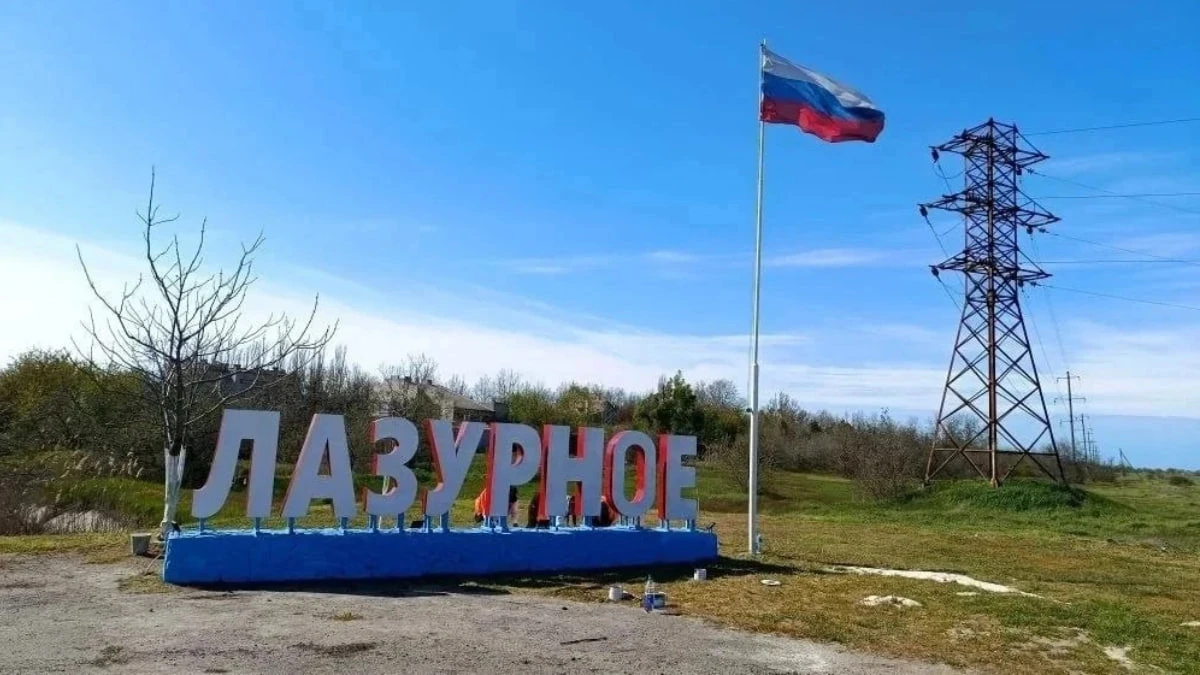
Occupation Authorities in Skadovsk Claim Evacuation of 1,730 People Following Kakhovka Dam Explosion
An occupation official in Skadovsk district claimed 1,730 evacuees were housed in Lazurne following the Kakhovka HPP dam breach, while Ukraine's Accounting Chamber record…
 🚨Events
Elina Svitolina and Marta Kostyuk Nominated for Prestigious WTA Season Awards
Ukrainian tennis stars Elina Svitolina and Marta Kostyuk have been shortlisted for the annual WTA Awards following a successful 2026 season, competing for Player of the Y…
 🛡️Security
Strike on Five-Story Building in Kyiv Region: 14 People Missing
A rescue operation is underway in the Vyshhorod district following a Russian drone strike that severely damaged an apartment building.
 🚨Events
Enemy Attacks Zhytomyr Region Energy Infrastructure Four Times in a Day: Details
Russian forces carried out four drone strikes against energy facilities in the Zhytomyr region within 24 hours, attempting to cut off residents from power and heating.
 🇺🇦Ukraine
Slovakia Refuses to Participate in New €45 Billion EU Loan for Ukraine
Slovak Prime Minister Robert Fico announced that his country will not join the European Union's new financial package for Ukraine, arguing that such assistance is unhelpf…