ArcelorMittal Crisis: Thousands of Steelworkers Risk Losing Mobilization Deferment
The production halt at ArcelorMittal Kryvyi Rih has triggered concerns over the loss of employee reservation status as wages fall below the government-mandated threshold.
 🇺🇦Ukraine
Photo: RBC-Ukraine
Key points
- AMKR employees face loss of deferment due to wage drops during production downtime.
- Industry experts propose removing the income threshold for critical enterprises in idle mode.
- Retaining experienced staff is vital for the eventual post-war industrial restart.
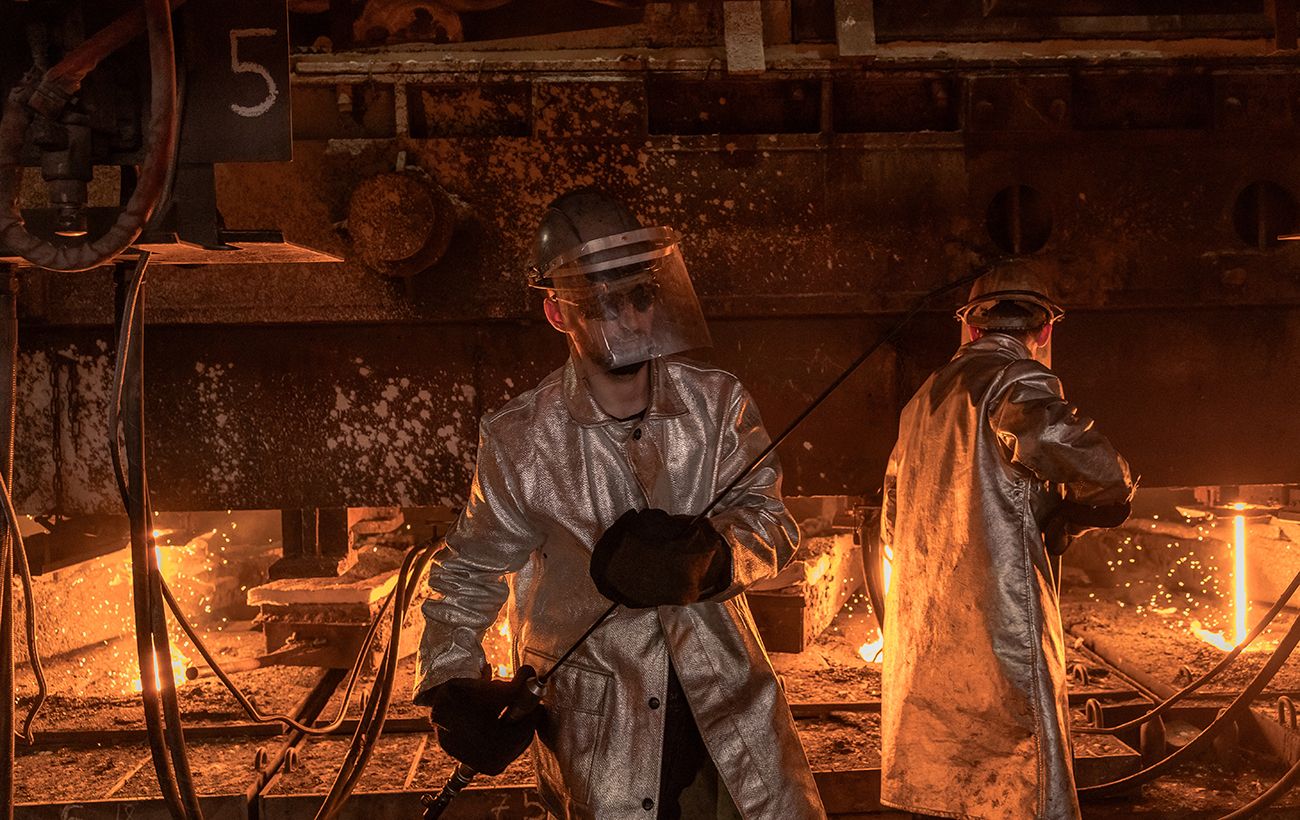
Ukraine's largest steel mill, ArcelorMittal Kryvyi Rih (AMKR), is facing a critical workforce challenge following its decision to suspend production. After a series of severe attacks in September, the company transitioned its equipment into a "cold idle" mode for safety reasons. This necessary operational pause has inadvertently created a legal crisis for its employees regarding their mobilization deferment, commonly known as "reservation."
Under current regulations, economic reservation requires employees to earn at least three times the minimum wage. However, during a production halt, labor laws dictate lower wage payments, causing thousands of skilled workers to fall below the eligibility threshold. Serhiy Belenkyi, head of the Federation of Metallurgists of Ukraine, warns that these specialists are automatically losing their protected status, leaving the industry's human capital vulnerable.
Calls for Urgent Policy Revision
Industry leaders and government officials are urging the Cabinet of Ministers to adjust the criteria for "critical enterprise" status. MP Olena Kryvoruchkina has proposed removing the salary requirement for companies in forced downtime and extending their critical status for another year. This measure is seen as vital for retaining unique specialists such as blast furnace operators and steelworkers, whose expertise is essential for both maintaining the idle equipment and its eventual restart.
Anatoliy Kinakh, President of the Ukrainian League of Industrialists and Entrepreneurs, argues that the reservation mechanism must account for objective reasons for downtime and the realism of production recovery plans. Experts emphasize that training a high-level specialist in the coking or smelting industry takes between three to five years, while master-level experience is accumulated over decades. Losing these individuals now would make a future industrial recovery nearly impossible.
Despite the current suspension, ArcelorMittal has reaffirmed its commitment to Ukraine, stating that the international group has no plans to exit the market. The company intends to resume full operations once the war ends, but the feasibility of this restart depends heavily on whether the government can provide a flexible framework to protect the workforce during this period of inactivity.
Source RBC-Ukraine — rbc.ua/ukr/news/tisyachi-metalurgiv-arcelormittal-kriviy-1795181100… ↗
Read next
Weather update: freezing temperatures expected in Western Ukraine
The Ukrainian Hydrometeorological Center warns of dropping temperatures and snowfall in the Khmelnytskyi region from November 24 to 29.
 🧠AI Analysis
Awaiting the Assault on Dobropillia: Analysis of the Front's Most Active Sector
Russian forces are preparing to storm Dobropillia in an attempt to cut the strategic highway to Kramatorsk, though their offensive pace has slowed significantly.
 🏛️Politics
EU Responds to Moscow's Invitation, Emphasizing Multilateral Approach to Peace Talks
The European Commission acknowledges Putin's invitation but maintains that security architecture discussions require a ceasefire and full NATO-EU participation.
 🛡️Security
Key Lessons of War: Former UCU Commander-in-Chief Highlights Global Security Priorities
Speaking at the Halifax International Security Forum, former Ukrainian Armed Forces Commander-in-Chief Oleksandr Syrskyi outlined three vital lessons from the Russia-Ukra…
 🧠AI Analysis
Ancient Cuneiform Tablet Uncovers Mesopotamian Trade Secrets
Archaeologists have translated a 4,000-year-old cuneiform tablet found near Baghdad, detailing everyday commercial transactions in ancient Mesopotamia.
 💼Economy
Low scrap metal export prices threaten Ukrainian metallurgy and budget, MP says
The Ministry of Economy's proposal to set the starting price for Ukrainian scrap metal exports at 27 euros per ton has sparked concerns over risks to industry and state f…