Cascading Crisis in Metallurgy Threatens Ukrainian City Budgets and Jobs
Production cuts in Ukraine's mining and metals sector trigger tax deficits and jeopardize local community financing.
 💼Economy
Photo: UNIAN
Key points
- Production drops in metallurgy cause tax and job deficits.
- Metinvest and other companies report significant tax payment reductions over 9 months.
- The crisis hits related sectors including energy, logistics, engineering, and small business.
- Industrial cities are forced to sequester budgets and halt infrastructure projects.
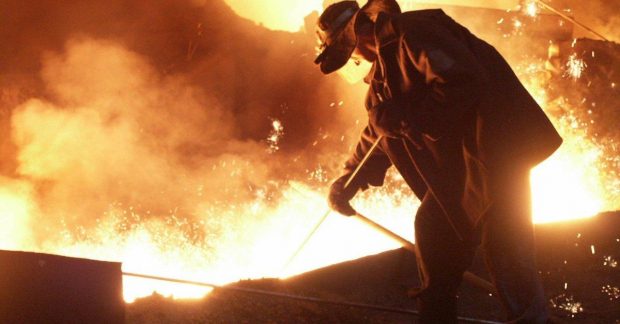
The crisis in Ukraine's metallurgical industry is no longer a localized issue for individual enterprises, having evolved into a systemic challenge for state and local finances. Due to ongoing shelling, logistical bottlenecks, and electricity shortages, key market players are forced to scale down production, inevitably triggering a chain reaction across related economic sectors.
Tax Reductions and Financial Pressure on Budgets
According to analysts, leading metallurgical enterprises have shown a significant drop in tax payments over the first nine months of the current year. Specifically, Metinvest reduced its budget contributions by 6%, while VAT revenues plummeted by 36%, and corporate income tax dropped by 26%. Similar downward trends are observed at other plants, some of which had to halt production processes late in the autumn.
Metinvest CEO Yuriy Ryzhenkov noted that the industry is at a critical juncture where export capacities, jobs, and billions of hryvnias in budget revenues are at risk. Production cutbacks severely impact energy, railway transport, machine building, and small businesses reliant on orders from major industrial enterprises.
Impact on Communities and Urban Infrastructure
Industrial cities bear the brunt of the crisis, as taxes from big business constitute a substantial share of local budgets. For instance, local authorities in several regions have already been forced to sequester budgets and freeze development projects due to shortfalls in personal income tax and land tax revenues.
Expenditures for road repairs, municipal infrastructure maintenance, hospitals, and educational institutions are typically the first to face cuts. Furthermore, communities are losing their ability to co-finance international grant initiatives and recovery projects, which hinders the long-term development of regions.
Source UNIAN — unian.ua/society/kaskadniy-efekt-padinnya-virobnictva-u-metalurgiji… ↗
Read next
Weather update: freezing temperatures expected in Western Ukraine
The Ukrainian Hydrometeorological Center warns of dropping temperatures and snowfall in the Khmelnytskyi region from November 24 to 29.
 🧠AI Analysis
Awaiting the Assault on Dobropillia: Analysis of the Front's Most Active Sector
Russian forces are preparing to storm Dobropillia in an attempt to cut the strategic highway to Kramatorsk, though their offensive pace has slowed significantly.
 🇺🇦Ukraine
Kremlin's Nuclear Blackmail: Dmitry Medvedev Threatens Ukraine with Preemptive Strike
Russian Security Council official Dmitry Medvedev outlined conditions under which Moscow might use nuclear weapons, aiming to intimidate Ukraine and its Western partners.
 🏛️Politics
EU Responds to Moscow's Invitation, Emphasizing Multilateral Approach to Peace Talks
The European Commission acknowledges Putin's invitation but maintains that security architecture discussions require a ceasefire and full NATO-EU participation.
 🇺🇦Ukraine
ArcelorMittal Crisis: Thousands of Steelworkers Risk Losing Mobilization Deferment
The production halt at ArcelorMittal Kryvyi Rih has triggered concerns over the loss of employee reservation status as wages fall below the government-mandated threshold.
 🛡️Security
Key Lessons of War: Former UCU Commander-in-Chief Highlights Global Security Priorities
Speaking at the Halifax International Security Forum, former Ukrainian Armed Forces Commander-in-Chief Oleksandr Syrskyi outlined three vital lessons from the Russia-Ukra…